

Understanding the Mineral Water Bottling Process: A Comprehensive Guide
Mineral Water
- Last updated on October 27, 2025
- 10 min read
- Blogs
- Understanding the Mineral Water Bottling Process: A Comprehensive Guide

Written by
aabekhalis@gmail.com

Reviewed & Fact-Checked by
Bilal Jameel

Why you can trust our content
The water industry is full of claims and confusing labels; we take the purity standards to new heights. Our content is backed by:
Learn more
- Experienced water quality experts, geologists, and health professionals
- Regular testing reports from certified labs and in-house quality studies
- Verified standards from trusted sources like WHO and PSQCA
Let’s Work Together
Table of Contents
A comprehensive mineral water bottling operation is one of the most powerful means of delivering pure, safe, and quality hydration to consumers worldwide. Be it establishing a small-scale bottling plant, a premium mineral water brand, or a large-scale distribution facility, you need a systematic approach to it all. Understanding the mineral water bottling process is one of the primary focuses of industry professionals. Here is how you can effectively understand and implement a bottling operation.
“A successful mineral water bottling operation is more than just packaging water. It’s about product quality, efficient production processes, and strategic market positioning. Whether you’re establishing a small-scale bottling plant, a premium mineral water brand, or a large-scale distribution facility, you need a systematic approach.”
Bilal Jameel
Co-Founder & CTO
What Is Mineral Water Bottling and Why Start One?
Mineral water bottling is a structured production process where manufacturers extract, purify, and package natural spring water for consumer distribution. It can serve as a premium bottled water brand, a local mineral water supply, or a niche-based health beverage business. These operations benefit entrepreneurs by improving market presence, providing valuable revenue streams, and enabling monetization through retail distribution or wholesale partnerships. Popular brands like Evian and Perrier generate revenue by offering premium quality products and strategic market positioning.
Start Your Mineral Water Bottling Journey with Confidence!
Step-by-Step Process to Build a Mineral Water Bottling Plant
Establishing a mineral water bottling business requires strategic planning and the right infrastructure. Below is a detailed process to create a successful bottling facility.
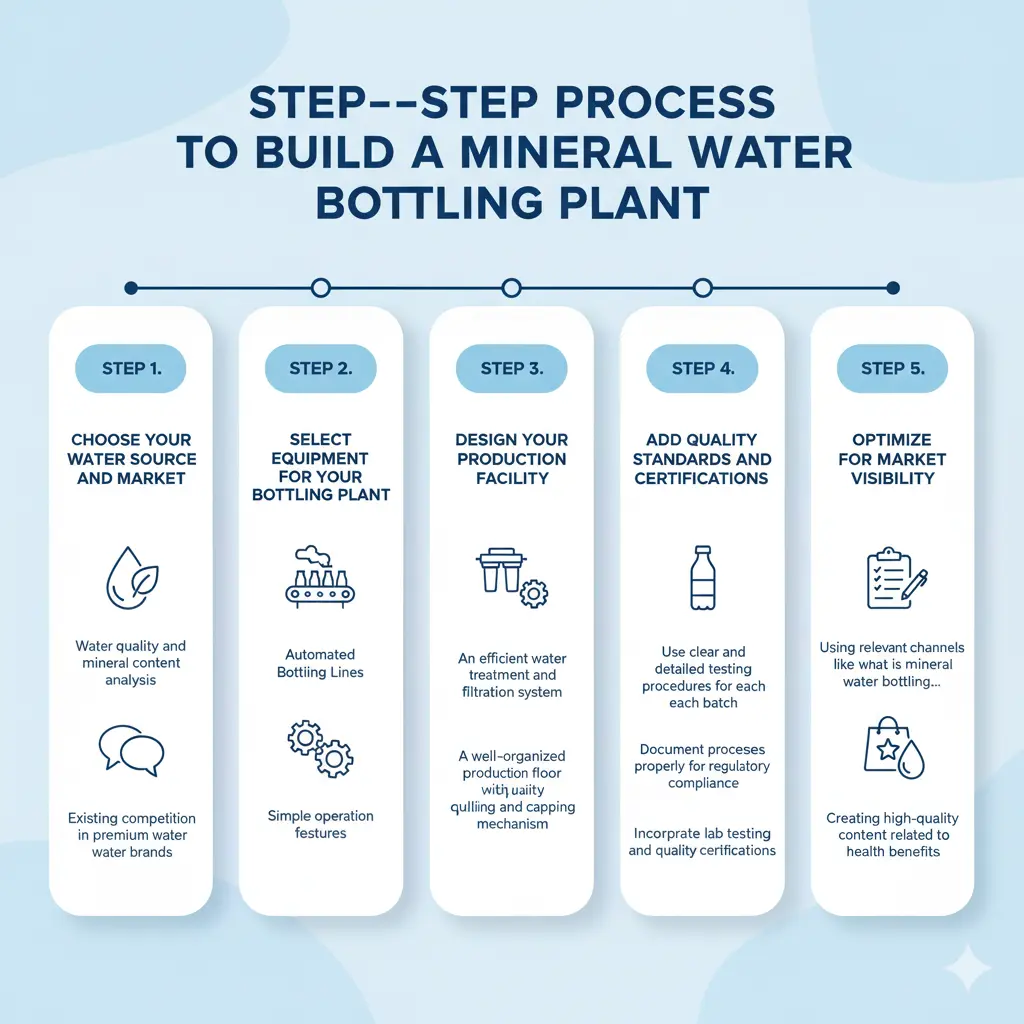
Step 1: Choose Your Water Source and Market
Selecting a quality water source is essential when learning how to start a mineral water bottling business or production facility. A successful bottling operation focuses on regions with high-quality springs and strong market demand. Consider factors like:
- Water quality and mineral content analysis
- Potential distribution channels (retail, wholesale, online)
- Existing competition in premium water brands
Step 2: Select Equipment for Your Bottling Plant
Choosing the right bottling machinery impacts your operation’s success. Some of the best options include:
- Automated Bottling Lines: Ideal for those who want high-capacity production and efficient processing control.
- Semi-Automated Systems: A cost-effective option for those wondering how to start a small-scale bottling plant with simple operation features.
Step 3: Design Your Production Facility
An effective bottling plant should have a hygienic environment, streamlined workflow, and compliance-ready layout. Key design considerations include:
- An efficient water treatment and filtration system
- A well-organized production floor with quality control stations
- A simple yet robust bottle filling and capping mechanism
Step 4: Add Quality Standards and Certifications
A mineral water bottling operation requires well-structured and comprehensive quality protocols. To ensure high-quality production:
- Use clear and detailed testing procedures for each batch
- Document processes properly for regulatory compliance
- Incorporate lab testing and quality certifications to enhance credibility
Step 5: Optimize for Market Visibility
Marketing plays a crucial role in making your mineral water brand visible to consumers. Essential marketing practices include:
- Using relevant channels like what is mineral water bottling and how to start a bottling business with quality standards
- Optimizing product packaging and brand messaging for better market positioning
- Creating high-quality content related to health benefits and water purity
Common Problems When Starting a Bottling Plant and Their Solutions
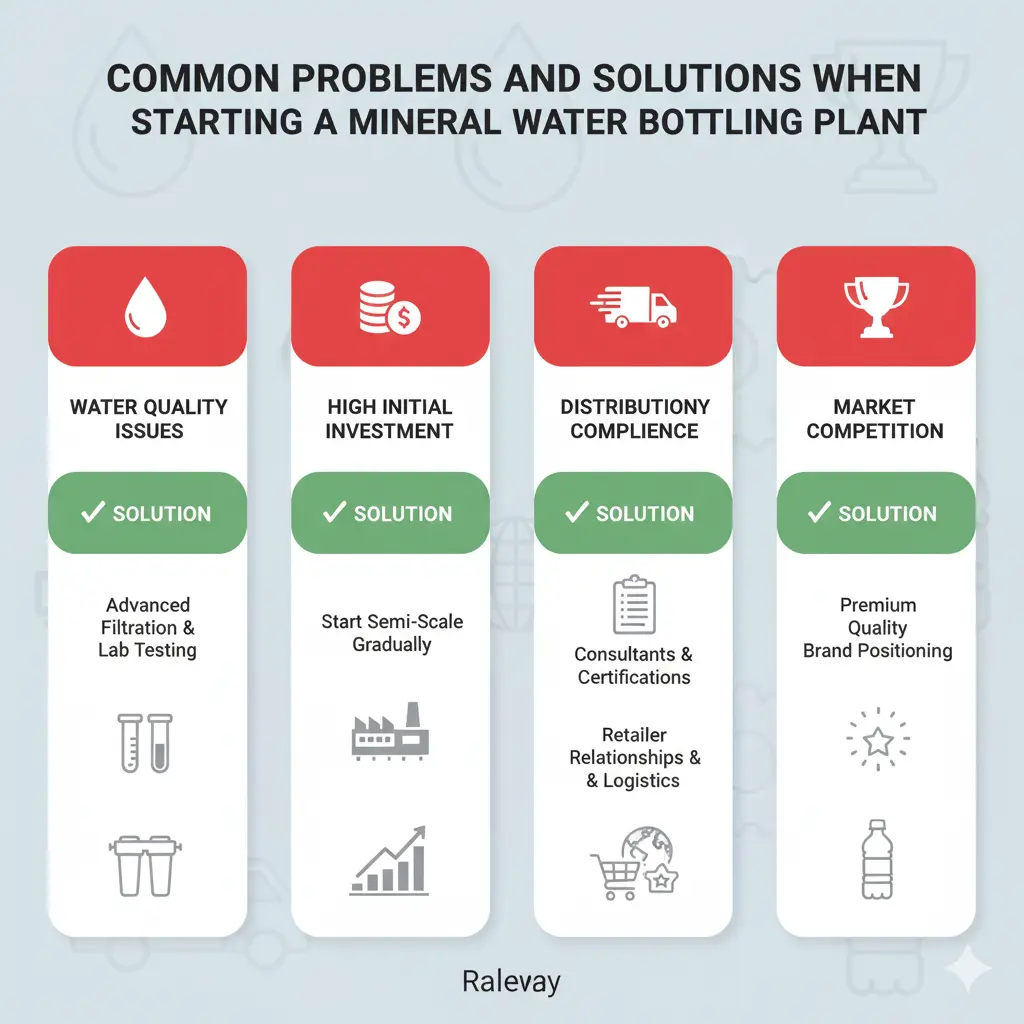
Many entrepreneurs face issues when figuring out how to start a mineral water bottling operation or production facility. Here are common problems and their solutions:
- Water Quality Issues: Implement advanced filtration systems and regular lab testing protocols.
- High Initial Investment: Start with semi-automated equipment and scale up gradually as revenue grows.
- Regulatory Compliance: Work with consultants and obtain necessary certifications before production begins.
- Distribution Challenges: Build strong relationships with retailers and establish efficient logistics networks.
- Market Competition: Focus on premium quality, unique mineral content, and strong brand positioning.
How Much Does It Cost to Start a Bottling Plant?
The cost of starting a mineral water bottling plant is based on both the scale of operation and the equipment choices. Estimated expenses include:
- Water Source & Licensing: Approximately PKR 1,400,000-5,600,000 initially
- Bottling Equipment: More or less PKR 8,400,000-42,000,000 depending on automation level
- Facility Setup & Infrastructure: Almost PKR 5,600,000-28,000,000 for construction and utilities
- Quality Testing & Certifications: Moreover, less than PKR 840,000-4,200,000 annually
- Initial Inventory (bottles, caps, labels): Around PKR 1,400,000-7,000,000
Understanding how much it costs to start a mineral water bottling operation helps in budgeting for long-term success and sustainable growth.
To ensure your mineral water bottling plant thrives, follow these best practices:
To ensure your mineral water bottling plant thrives, follow these best practices:
- Maintain Consistent Quality: Keep water testing regular and production standards high.
- Build Customer Trust: Encourage customer feedback and transparent sourcing information.
- Diversify Revenue Streams: Offer premium product lines and wholesale partnership options.
- Optimize Production Efficiency: Monitor equipment maintenance and reduce operational waste.
- Stay Compliant: Keep all certifications current and follow regulatory requirements strictly.
Turn Your Idea into a Live Bottling Plant Today!
Conclusion: Is Starting a Bottling Plant Worth the Effort?
Learning how to start a mineral water bottling business requires effort, but it offers long-term revenue potential and sustainable growth. If you’re looking to create a profitable bottling operation, investing time in water quality research, equipment selection, and market positioning will ensure success.
Need Help Building Your Bottling Plant? Contact Us Today!
Aab-e-Khalis specializes in bottling plant consultation solutions, helping entrepreneurs establish the best mineral water facilities. If you need expert guidance on how to start a bottling operation, reach out to us today!
Your bottling business deserves a strong foundation!
Get in touch with us to plan and build a powerful, scalable bottling operation tailored to your market.
FAQs – Everything You Need to Know About Bottling Plants
What is mineral water bottling and how does it work?
Mineral water bottling is the process of extracting natural spring water, filtering and purifying it, testing for quality, then packaging it in sterilized bottles for sale to consumers.
How much does it cost to start a mineral water bottling plant in Pakistan?
Starting costs range from PKR 15,000,000 to PKR 85,000,000 depending on plant size, equipment type (automated vs. semi-automated), and production capacity.
What equipment do I need for a mineral water bottling plant?
Essential equipment includes water filtration systems, bottle washing machines, filling and capping machines, labeling equipment, storage tanks, quality testing instruments, and conveyor systems.
What certifications and licenses are required for bottling mineral water?
You need PSQCA certification, FDA/health department approval, environmental clearance, trade license, business registration, and ISO certifications. Regular water quality testing is mandatory.
How do I choose the right water source for my bottling plant?
Choose based on water quality and mineral content, consistent flow rate, legal extraction rights, location accessibility, testing results for purity, and proximity to your target market.
What is the production capacity for a small-scale bottling plant?
A small-scale plant produces 1,000 to 3,000 bottles per hour, or approximately 8,000 to 24,000 bottles per 8-hour shift, depending on automation level.
How can I ensure water quality and safety in my bottling operation?
Implement regular lab testing, advanced filtration systems, strict hygiene protocols, trained quality staff, routine equipment maintenance, and proper documentation of all quality control processes.
What are the ongoing operational costs of running a bottling plant?
Monthly costs include raw materials (PKR 500,000-2,000,000), utilities (PKR 200,000-800,000), staff salaries (PKR 300,000-1,500,000), maintenance (PKR 100,000-400,000), and testing fees.
How long does it take to set up a mineral water bottling plant?
Complete setup takes 6 to 12 months, including feasibility study, licensing, facility construction, equipment installation, certification, staff training, and trial production phases.
What are the best marketing strategies for a new mineral water brand?
Focus on strong packaging design, competitive pricing, local retailer partnerships, social media marketing, product sampling, distributor relationships, and highlighting unique quality features like mineral content or source.